

When businesses compare 3CX vs FreePBX, they are usually choosing between two very different approaches to a modern PBX system. Both are well-known in the VoIP market, but they differ in setup, management style, and long-term operating model.
That matters because a modern business phone system is no longer just about voice. Many companies now expect support for unified communications, including mobile access, messaging, video conferencing, CRM integrations, and flexible deployment such as on-premises or cloud hosting. In this guide, we will explain what 3CX and FreePBX are, compare their key differences, and help you decide which option may fit your business better.
Table of Content
- What Is 3CX?
- What Is FreePBX?
- 3CX vs FreePBX: Key Differences
- 3CX vs FreePBX: Which One Should You Choose?
- Looking for an Alternative to 3CX and FreePBX?
- Final Conclusion
What Is 3CX?
3CX is a commercial IP PBX platform designed for businesses that want calling, collaboration, and customer communication tools in one system. 3CX offers voice calling, mobile and web apps, live chat, and video conferencing, making it more than a traditional phone platform.
It is generally positioned as a more ready-to-use solution with a cleaner user interface, built-in business features, and support for different deployment models.
What Is FreePBX?
FreePBX is an open-source IP PBX management platform developed on the Asterisk telephony engine, officially owned, maintained, and supported by Sangoma Technologies. As an open-source business phone system solution, it gives organizations complete control over the configuration, deployment, and ongoing management of their enterprise telephony system.
3CX vs FreePBX: Key Differences
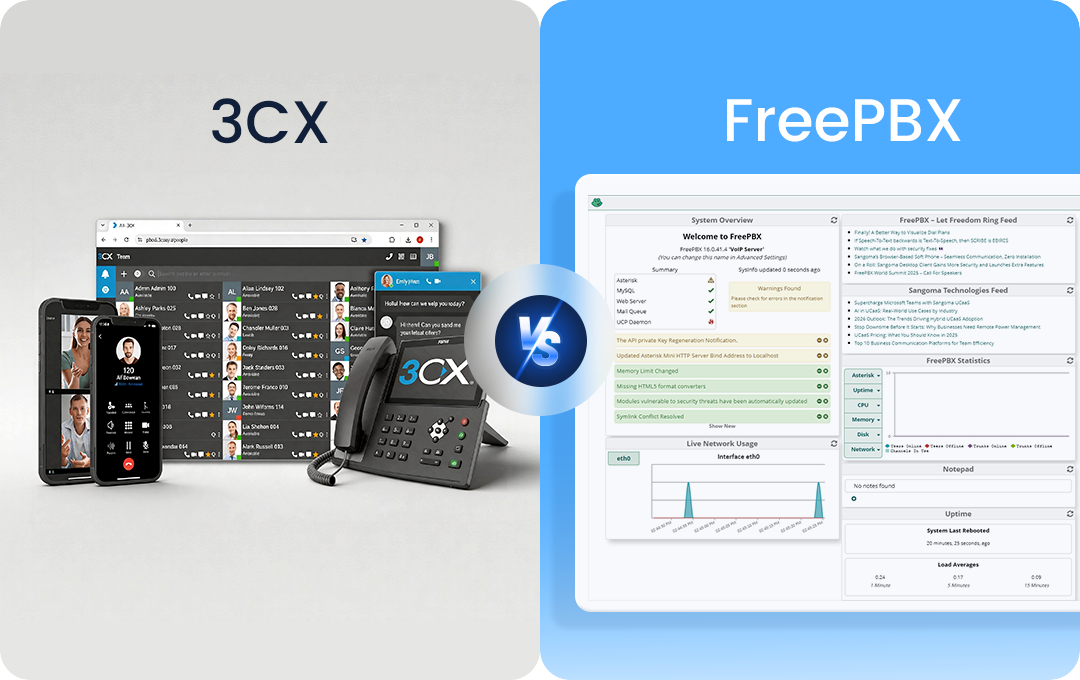
Ease of Setup and Administration
3CX is designed as a more packaged experience. Its official positioning emphasizes flat annual licensing, deployment flexibility, and built-in mobile/web access, all of which reduce the number of separate decisions a business has to make during rollout. However, it comes with noticeable limitations in centralized PBX management, with incomplete and less streamlined tools for unified fleet oversight and bulk administration.
FreePBX does provide an intuitive GUI, and its official site highlights extension management, IVR setup, restore and backup, and updates. But the broader value proposition of FreePBX is flexibility, not abstraction from complexity. In practice, that means the admin experience can be excellent in experienced hands, but the overall burden is usually higher when the business itself has to decide how to combine modules, harden the environment, and maintain it over time.
Customization and Flexibility
This is where FreePBX usually wins on principle. Because FreePBX is built around open-source communications and Asterisk administration, it gives businesses room for deeper tailoring. That includes module choices, dial plan logic, endpoint compatibility, and broader room for customizations FreePBX users often care about. Its official materials emphasize open standards and compatibility with commercially available telephony hardware and SIP endpoints, which is central to its appeal.
3CX is more controlled by design. That is not necessarily a weakness; in many organizations, standardized configuration is actually a strength because it lowers support friction. But it does mean that companies seeking very deep telephony-level tailoring may find FreePBX more appealing. The trade-off is familiar: more flexibility usually means more responsibility for build quality, support structure, and maintenance discipline.
Calling, Collaboration, and Mobility
On pure voice, both platforms can support serious business telephony. But 3CX puts more emphasis on collaboration and mobility as native parts of the offer. Official 3CX materials highlight web and mobile apps, video conferencing, WhatsApp, Facebook messaging, and remote-working readiness. The feature list also includes built-in conferencing functions such as screen sharing and polls on supported editions. This makes 3CX attractive for companies that no longer see telephony as separate from daily collaboration.
FreePBX can be extended to support conferencing and mobile-oriented use cases via the broader Sangoma ecosystem, but the official FreePBX positioning remains centered on core PBX functionality, rather than an all-in-one collaboration solution. Even Sangoma’s own commercial PBXact messaging suggests that richer UC functions, collaboration apps, and commercially polished user experience are only available in that separate, paid commercial layer, not included in the core FreePBX platform.
Integrations
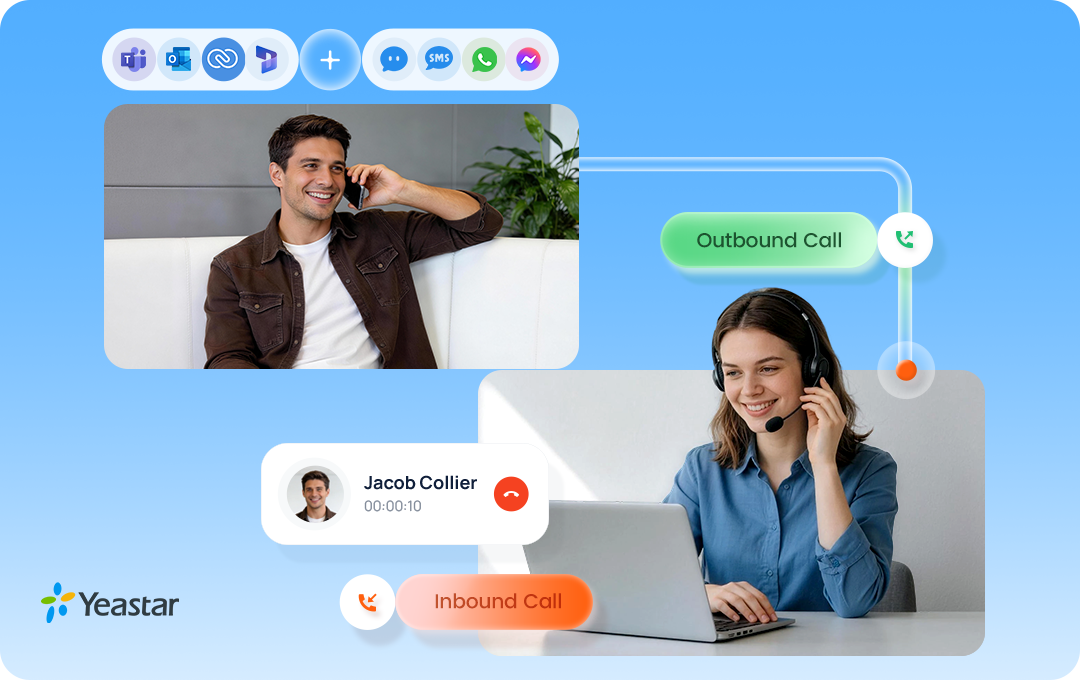
3CX’s official documentation states that it supports CRM integrations with systems such as Zendesk, Zoho, Salesforce, and Freshdesk, and also notes that custom integration can be done via the 3CX API. Its feature pages additionally point to Microsoft 365, Google Workspace, and Teams-related integration paths. For companies that want calling to connect directly with sales and support workflows, that matters.
FreePBX can integrate as well, but the official framing is more modular. Sangoma’s CRM Link module, for example, is designed to connect the PBX to CRM software so it can push call history and caller information, while also enabling click-to-call and inbound call pop–ups in conjunction with Zulu. That shows real capability, but it also reflects a more component-based model rather than one unified product story.
Pricing and Total Cost of Ownership
This is one of the most misunderstood points in PBX comparisons. 3CX offers a flat annual pricing model, claiming cost savings over traditional enterprise phone systems, plus flexible hosted/on-prem/self-hosted deployments and BYO trunk/number options to control spending. Yet, with at least four significant changes to its licensing policies and pricing structure between 2024 and 2026, the platform has created notable uncertainty and frustration among many channel partners.
FreePBX draws interest for its “free” open-source core, but businesses must separate license costs from total cost of ownership (TCO). Hidden real-world costs include server infrastructure, implementation, paid support, commercial modules, and ongoing maintenance labor. Sangoma’s official FreePBX ecosystem includes paid add-ons, proving most organizations eventually pay for features and support despite the free base platform.
The right question is not “Which is cheaper?”, but “Which delivers lower cost for our team structure and user count?”. A technical team can run FreePBX efficiently, while lean businesses with limited admin bandwidth will see lower real-world TCO with 3CX once staffing and maintenance are factored in.
Security, Support, and Maintenance
3CX provides official documentation around backup and restore, and recent 3CX release materials have highlighted system monitoring, auto-recovery, encrypted backups, and expanded remote storage options. That suggests an ongoing focus on operability and admin-centric improvements. But the platform’s reputation remains clouded by serious historical security breaches, mandatory forced upgrades, and a dismissive attitude toward user feedback — with critical voices often suppressed or accounts banned in official communities.
FreePBX, for its part, has documentation, videos, and community forums, and Sangoma’s support page clearly directs users toward those resources. At the same time, its own community-facing security advisories have reminded administrators to lock down internet-exposed management interfaces and configure firewall protections correctly. That does not make FreePBX uniquely insecure, but it does reinforce the broader point: an open system places more responsibility on the operator to manage exposure well.
Which One Should You Choose?
Choosing between 3CX and FreePBX usually comes down to a few practical questions: how much flexibility you need, how much administration your team can handle, and whether you want a PBX focused mainly on telephony or a more integrated communications experience. While both platforms serve distinct use cases, there is also a third option designed to bridge the gap between these two extremes: Yeastar. Here is a quick summary of how the three compare.
3CX vs FreePBX vs Yeastar at a Glance
| 3CX | FreePBX | ★ Yeastar | |
|---|---|---|---|
| Setup | Hosted, on-premises, or self-hosted; guided setup | Asterisk-based; manual setup and upgrade handling | Flexible & guided deployment across cloud, software, and on-premises |
| Administration | Easier to manage | More flexible, more admin work | Centralized management with granular control |
| Customization | Moderate | High | Moderate to high, with business-oriented configurability |
| Collaboration | Built-in chat, mobile apps, and video conferencing | Primarily PBX-focused; collaboration via add-ons | Built-in UC tools with business-grade features |
| Integrations | Native integrations support | More modular approach | Native integrations + open APIs for custom builds |
| Pricing Model | Flat annual licensing | Open-source core, variable add-on costs and possible maintenance risk | Predictable licensing with transparent pricing |
| Support Model | Partner-led + direct paid vendor support | Docs, community, and paid Sangoma support | 24/7 technical support via ticket/email, live chat, and urgent phone support; plus dedicated partner resources |
| Best Fit | Businesses wanting simplicity and built-in UC | Businesses wanting control and flexibility | Businesses and partners wanting both ease of use and full control |
If your business values faster deployment, easier management, and a more polished communications experience, 3CX will usually be the better fit. It is often the simpler choice for teams that want built-in collaboration, mobility, and a cleaner day-to-day admin experience.
If your business values openness, deeper customization, and greater control over how the system is built, FreePBX is usually the stronger option. It makes more sense for teams that are comfortable with a more hands-on approach and want to shape the PBX environment more freely.
Looking for an Alternative to 3CX and FreePBX? Consider Yeastar
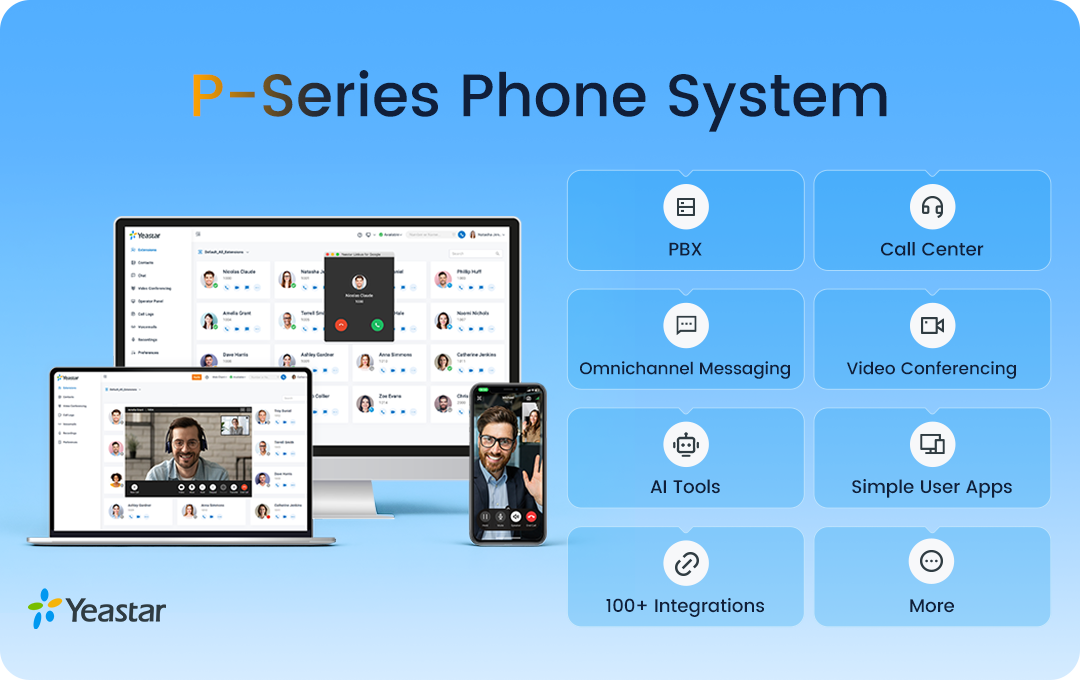
For some businesses, the real choice is not just between 3CX and FreePBX. They want the simplicity and built-in collaboration tools of a commercial system like 3CX, but paired with transparent, stable pricing and enterprise-grade centralized management that supports their long-term business goals. At the same time, they want to avoid the heavy DIY overhead and hidden costs that come with open-source PBX platforms. That’s where Yeastar P-Series Phone System steps in as a strong, balanced alternative.
-
Solid Business Features
Beyond core telephony functions, Yeastar delivers a comprehensive business-grade communication solution with an intuitive web portal and native apps. Its core capabilities include inbound and outbound call center functionality, AI tools, and seamless integrations — covering universal CRM connections, automated provisioning for over 500 IP phone models, and support for SIP trunks from 210+ global ITSPs.
You Can Explore the Full Feature List Here.
-
Unified Management
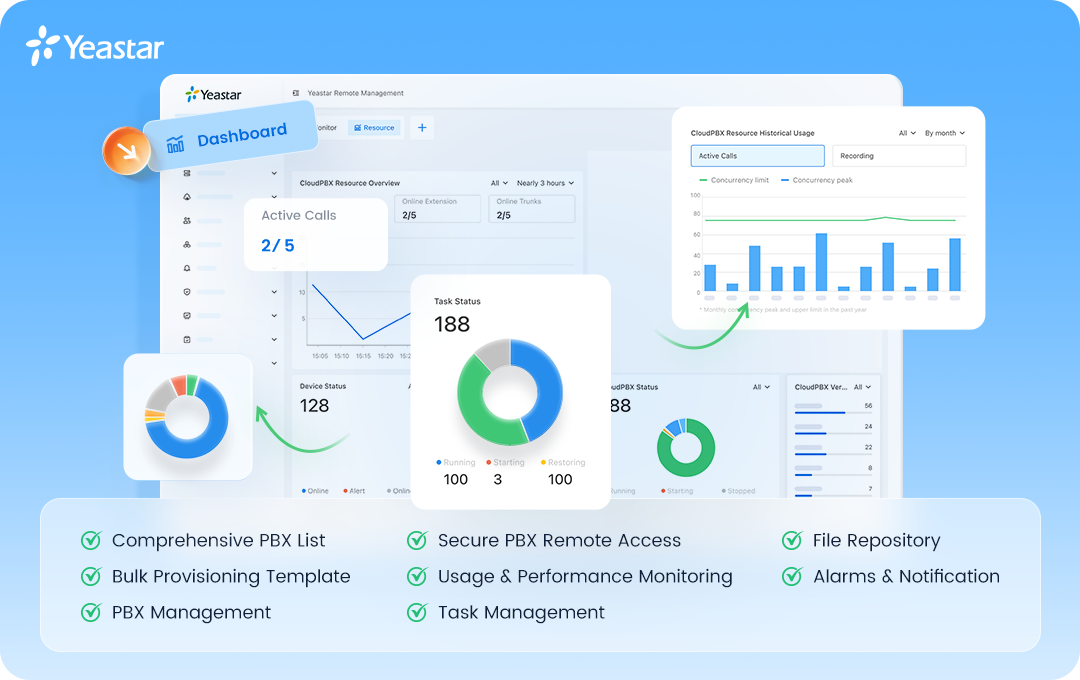
One of Yeastar’s biggest advantages is manageability at scale. Yeastar highlights its central management capabilities for bulk provisioning, monitoring, trunk and DID sharing, and system-wide updates from a single interface. That is a much more concrete operational benefit than simply saying a platform is “easy to use,” especially for businesses or partners managing multiple deployments.
-
Flexible Licensing & White-Label Capabilities
Yeastar is a strong fit for service providers, resellers, and fast-growing businesses with highly flexible, scalable business and branding tools. It offers both Simultaneous Call and Per Extension licensing models, giving businesses full control to align pricing directly with their usage patterns and scale cost-effectively. Additionally, the platform supports full white-label customization across the PBX system, central management platform, and softphone app, empowering partners with complete ownership over their brand identity and end-customer experience.
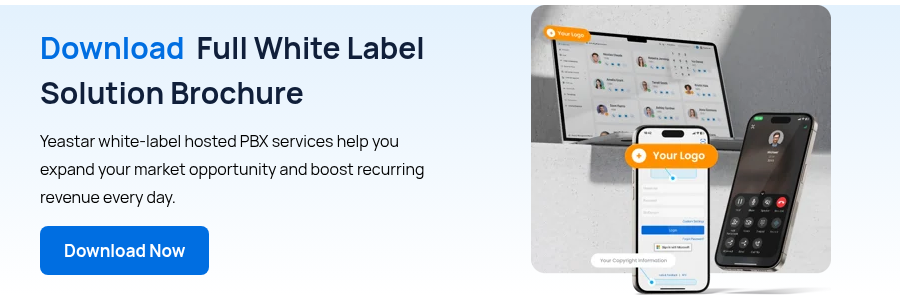
Service providers can use Yeastar’s full white-label suite (PBX, softphone & management platform) to launch UCaaS under their own brand. Click the button above to download our White Label UCaaS Brochure to learn how Yeastar can transform your business. ↑↑↑
Final Verdict
3CX and FreePBX solve different problems. 3CX is the more standardized route: cleaner to deploy, easier to administer, and stronger on built-in collaboration. FreePBX is the more open route: better for deeper customization, broader telephony control, and businesses that want to shape the system more freely.
That said, many buyers are not really looking for either extreme. They want a PBX that is easier to run than a DIY stack, but more flexible and partner-friendly than a strictly controlled platform. That is where Yeastar P-Series Phone System becomes especially compelling. With centralized management, white-label support, built-in integration, and flexible licensing models, it gives businesses a more practical path forward when the usual 3CX vs FreePBX comparison feels too limiting.

Common FAQs


