

How to Optimize SIP Trunk Operations with Yeastar Central Management (YCM): One Platform, Everything Under Control
4.9 min read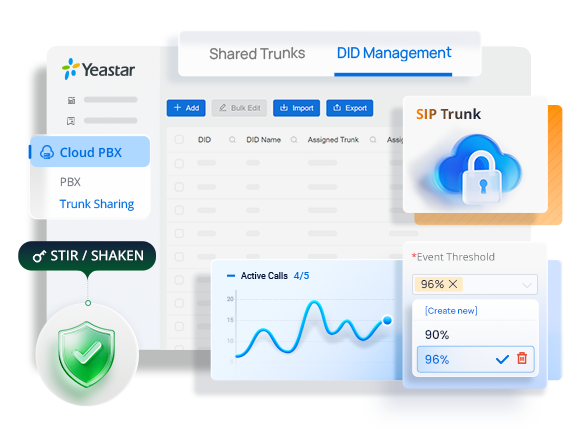
As service providers expand their communications offerings, managing SIP trunk resources can become increasingly complex. Many providers work with multiple suppliers, which can lead to fragmented management processes and limited visibility across their overall infrastructure. Service providers managing multiple PBXs need a centralized way to manage trunk resources, allocate capacity, and monitor usage efficiently.
That’s exactly why we built Yeastar Central Management (YCM), the management platform for Yeastar P-Series PBX. Designed for ITSPs, MSPs, and channel partners managing multiple PBXs, YCM helps simplify day-to-day operations through centralized deployment, provisioning, monitoring, and administration. Among its many capabilities, its strong SIP trunk management competence gives service providers an easy way to manage shared trunks, optimize utilization, and streamline operations at scale.
Table of Contents
- Simplify Multi-PBX SIP Trunk Operations →
- Ensure Predictable Trunk Resource Allocation →
- Prevent Unauthorized Trunk Access & Modifications →
- Meet Compliance Requirements →
Simplify Multi-PBX SIP Trunk Operations
Share Trunks Across Multiple PBXs
For service providers, every new PBX deployment traditionally requires configuring a dedicated SIP trunk, even when multiple customers share the same upstream SIP trunk provider. As deployments grow, this approach leads to repetitive configuration and fragmented trunk resources that are difficult to manage.
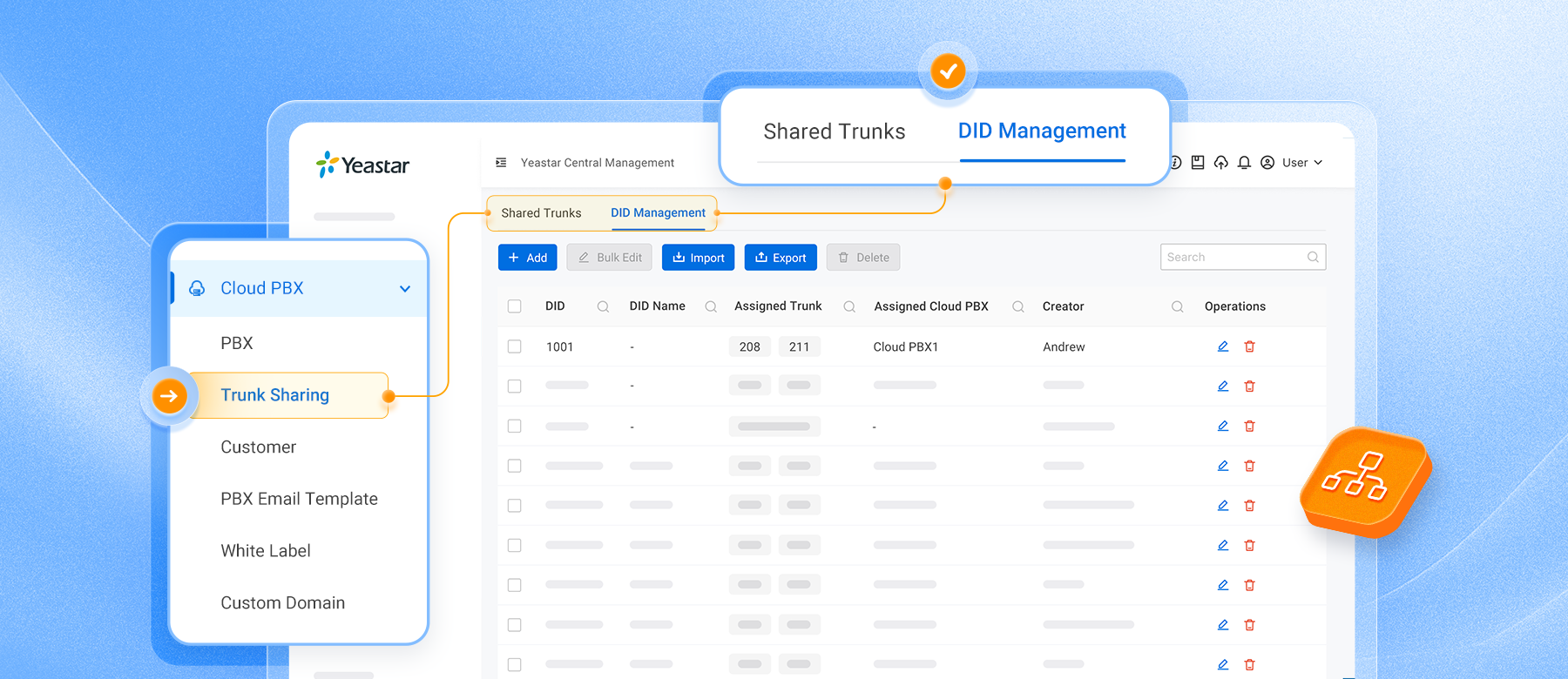
Yeastar addresses this challenge with the Trunk Sharing Feature, allowing administrators to create a SIP trunk once and share it across multiple P-Series Cloud Edition (PCE) instances. Instead of maintaining separate trunk configurations for each PBX, providers can centrally manage shared trunks and enable multiple PBXs to use the same upstream connection. To further simplify deployment, YCM includes built-in SIP Trunk Templates for supported providers. When creating a shared trunk, administrators can simply select their ITSP from the certified list, allowing YCM to automatically populate the required SIP parameters.
Together, these capabilities help service providers make better use of their SIP trunk resources. By bringing their own carrier and sharing trunk resources across multiple PBXs, providers can improve overall trunk utilization instead of reserving dedicated resources for individual deployments. Sharing a single upstream trunk also helps reduce SIP registration overhead, while centralized management ensures consistent trunk configurations and simplifies ongoing administration.
Easier DID Management
Shared Trunk becomes even more valuable when combined with Centralized DID Management. Instead of managing DID numbers separately on individual PBX instances, YCM enables service providers to centrally manage both trunk and number resources from a single platform.
Administrators can import DID numbers in batches, create DID ranges, and assign DIDs to different PBXs as needed. This eliminates the need to maintain separate DID number pools on individual PBXs and makes number provisioning faster and more consistent, especially when onboarding new customers or expanding existing deployments.
With both shared trunks and DID resources managed centrally, service providers gain a clearer view of available number resources and can allocate them more efficiently across their hosted PBX environment. This reduces administrative overhead, minimizes provisioning errors, and makes it easier to scale customer onboarding.
Ensure Predictable Trunk Resource Allocation
Sharing SIP trunks across multiple PBX instances improves resource utilization, but it also introduces a new operational challenge: how to allocate limited channel resources fairly while preventing over-consumption. Without proper controls, one PBX instance can consume excessive concurrent call (CC) capacity, potentially affecting call availability for others during peak traffic periods.
Concurrent Call (CC) Allocation
YCM addresses this challenge with Shared Trunk Channel Quota Management, allowing service providers to define Maximum Concurrent Calls (CC) quotas for individual PBX instances or downstream users when assigning a shared trunk. Instead of allowing every deployment to consume the entire shared trunk capacity, providers can allocate channel resources based on customer plans or business requirements, ensuring that each user has access to the capacity they need while preventing resource exhaustion caused by unexpected traffic spikes.
Real-Time Usage Monitoring
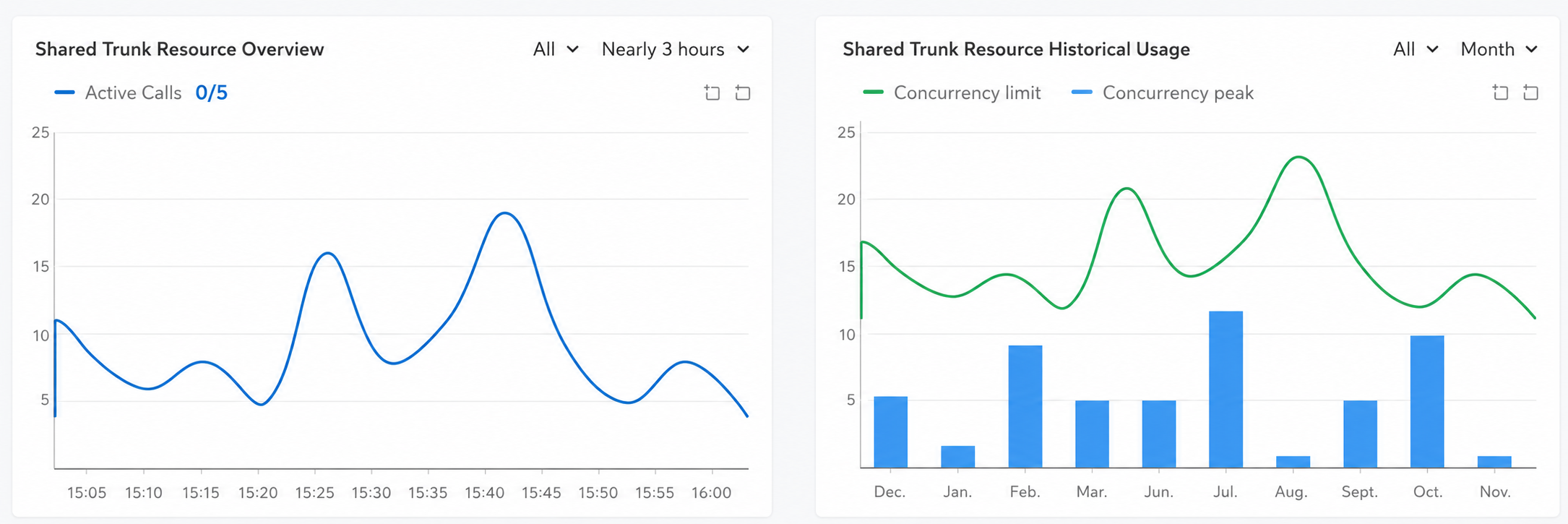
Centralized quota management is complemented by real-time usage monitoring, giving administrators a clear view of both active calls and allocated CC consumption. This visibility makes it easier to understand how channel resources are being utilized, identify underused or heavily loaded trunks, and make informed capacity planning decisions.
Threshold Alerts for Capacity Protection
To further improve operational reliability, YCM also provides configurable threshold alerts for shared trunk usage. When concurrent call consumption reaches predefined thresholds, the platform automatically notifies the relevant users before available capacity is exhausted. Users receive alerts when they approach their allocated quotas, while administrators are notified if the overall shared trunk is nearing its capacity limit. This proactive approach helps providers resolve capacity issues before they become customer-facing incidents, reducing service disruptions and minimizing emergency operational intervention.
Prevent Unauthorized Trunk Access & Modifications
Centralized management requires stronger governance. When shared trunks are used across multiple PBX instances and managed by different roles, providers need clear permission boundaries to protect critical resources. YCM addresses these requirements with the following features.
Trunk Configuration Access
Some providers allow customers to configure their own SIP trunks; others prefer to provide and manage trunk resources centrally as part of their hosted communication services. To support both approaches, YCM provides Trunk Configuration Access, allowing administrators to determine whether users are permitted to add or import SIP trunks.
This capability helps standardize trunk deployment across customer environments and ensures that users rely on the authorized trunk resources made available through YCM. At the same time, service providers can choose to grant configuration access whenever greater deployment flexibility is required, enabling different operational models without changing the underlying management architecture.
Shared Trunk Access Control
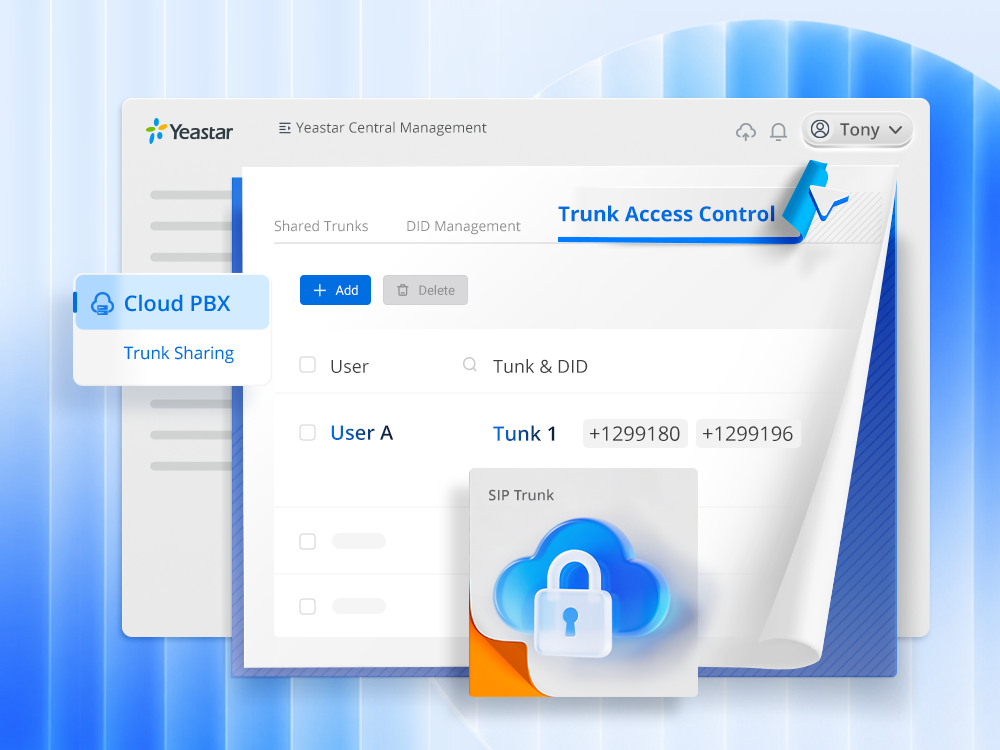
While Trunk Configuration Access determines whether users can create or import SIP trunks, service providers may also want to control which trunk resources are available to each partner. YCM addresses this with Shared Trunk Access Control, allowing administrators to authorize specific users to assign designated shared trunks and associated DID numbers to the PBXs they manage, without exposing the underlying trunk configuration.
Used together with Trunk Configuration Access, service providers can build a clear operational boundary: administrators retain centralized ownership and management of SIP trunks, while users are given only the level of access required to provision services for their customers. This approach supports multi-tier channel operations, helping providers maintain standardized trunk deployments while giving users the flexibility to onboard and manage customer PBXs efficiently.
Meet Compliance Requirement
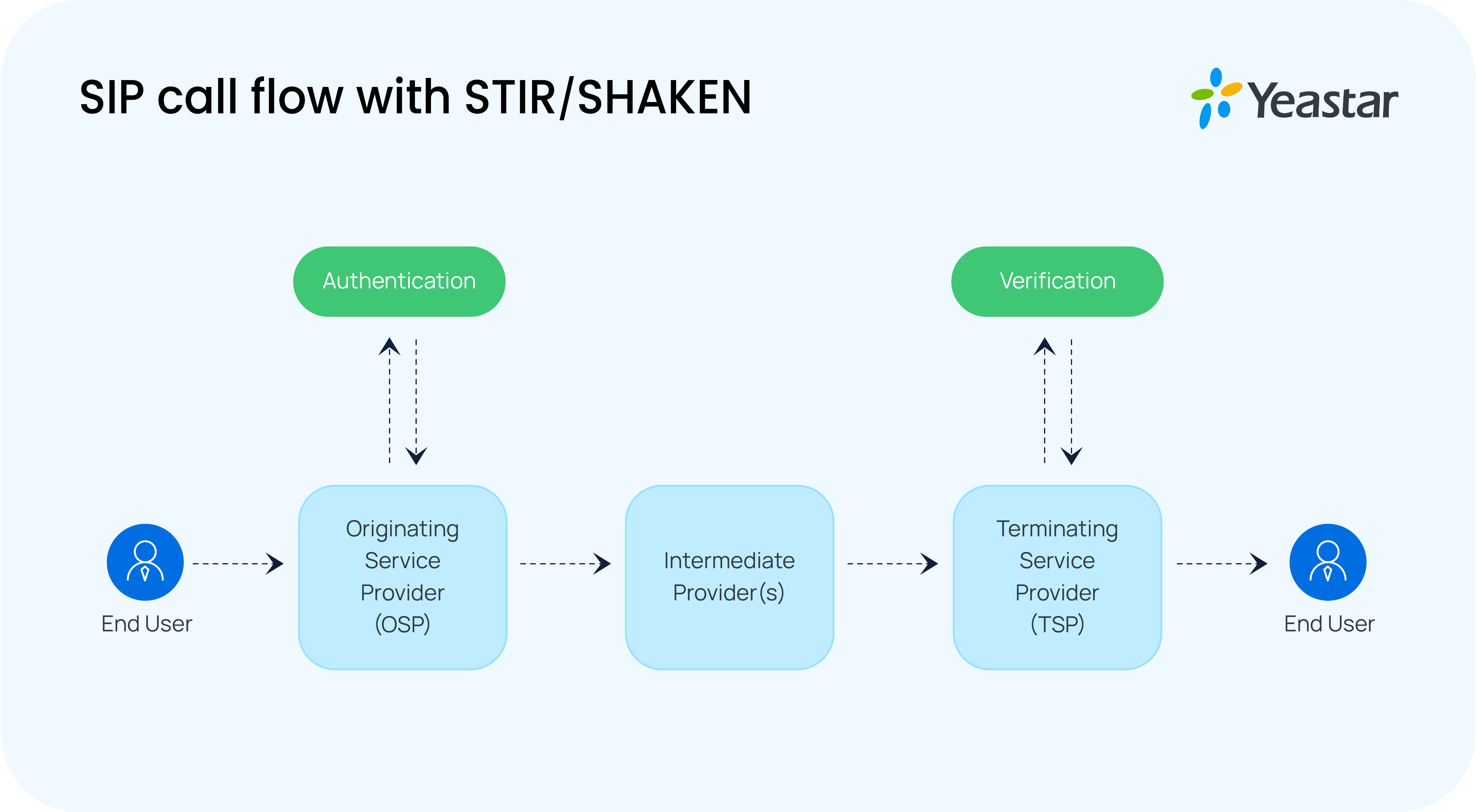
As STIR/SHAKEN adoption in North America continues to grow, deploying and maintaining caller authentication can introduce additional operational complexity for service providers. YCM simplifies this process with a built-in STIR/SHAKEN framework, allowing administrators to upload certificates and configure signing and verification policies directly from a centralized platform.
Once configured, the PBX handles the complete STIR/SHAKEN workflow automatically. Outbound calls are digitally signed using the uploaded certificate, while inbound calls are automatically verified against the originating provider’s public key. Based on the verification result, trusted calls are delivered as normal, while suspicious calls can be processed according to predefined filtering policies. All signing and verification results are also recorded in Call Detail Records (CDR) for monitoring.
By integrating the entire STIR/SHAKEN workflow natively into the platform, Yeastar eliminates the need for additional systems or complex deployment processes. This allows service providers to implement trusted caller authentication more easily, reduce deployment complexity, support regulatory compliance, and deliver more trustworthy voice services.
Empower Your Business with Yeastar Central Management
Managing SIP trunks at scale shouldn’t require multiple platforms, repetitive configuration, or fragmented workflows. If you’re ready to simplify trunk operations, improve operational efficiency, and build a more scalable communications service, our team is ready to help. Get in touch with us to schedule a personalized demo and see how Yeastar Central Management can support your business every step of the way!


